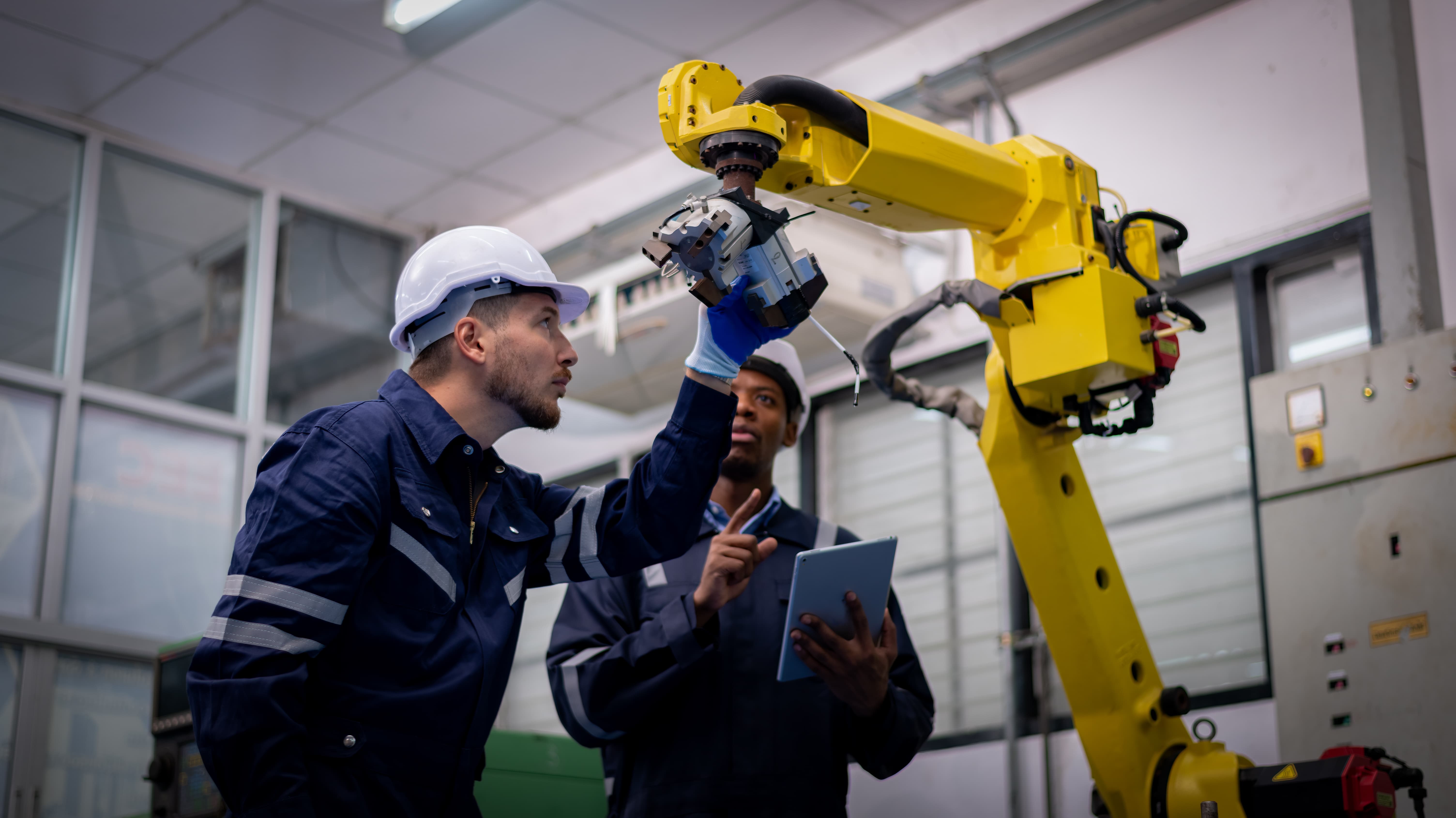
Every week, somewhere on a shop floor, someone with thirty years of experience hangs up their work gloves for the last time. They know which machines run hot in summer. They know which supplier to call when the standard one fails. They know things that were never written down, because they never needed to be, the knowledge lived in the person, transferred through proximity, observation, and years of working alongside someone who knew more.
When they leave, that knowledge goes with them. This is the quiet crisis unfolding across manufacturing, and most organizations are underprepared for it, not because they don't know it's coming, but because the urgency hasn't translated into action at the speed the problem requires.
The scale of what is approaching is significant enough that the organizations treating this as a future problem are already behind. The ones that will navigate it well are those that have started treating workforce transition as a strategic priority — with the same rigor they apply to capital investment, process improvement, and market development.
The numbers are significant
In 2025, a record 4.2 million Americans will reach the age of 65, according to ScottMadden research. In manufacturing specifically, studies estimate that 50% of operations-related roles could face retirement in the next seven to nine years. Between 2024 and 2033, an estimated 2.8 million jobs will be created in the US through retirements alone. Up to 1.9 million of those positions may be difficult to fill, with potential economic losses reaching $454 billion by 2028 according to Deloitte and The Manufacturing Institute.
The 2025 Aging Workforce Study from the Northeast Wisconsin Manufacturing Alliance found that 44% of machinists, 45% of engineers, and 40% of plant managers are already 56 years of age or older. The pipeline behind them is thin — and in many cases, it doesn't exist at all.
This is not a US-specific problem. Across Western Europe, Japan, and South Korea, manufacturing sectors are facing similar demographic pressures. In Germany, the engineering and skilled trades workforce is aging at a rate that has already created shortages in critical sectors. In Italy, where manufacturing contributes significantly to GDP, the combination of an aging workforce and limited inbound migration of skilled professionals is creating structural talent gaps that are compressing timelines for succession planning across industrial companies of all sizes.
The succession planning gap
Only 19% of organizations have formal succession plans, according to ScottMadden. And 72% of those that do focus exclusively on executive and senior management, ignoring the operational roles where knowledge loss is most damaging and most difficult to reverse.
A McKinsey survey found that only about one third of critical roles are backed by any succession plan at all. This is not a future problem. It is a present one, playing out in slower troubleshooting times, higher error rates when veterans are absent, and an accelerating loss of institutional knowledge that is nearly impossible to recover once it's gone.
The challenge with operational knowledge in manufacturing is that it is rarely documented in a way that makes transfer straightforward. Process manuals capture the official procedure. They don't capture the judgment calls, the experienced technician who knows that a particular variance in machine output means maintenance is needed in 48 hours, not when the scheduled check arrives. That knowledge is only transferable through relationship and time. Which means that succession planning in manufacturing is not primarily a documentation exercise. It is a relationship and time investment that needs to start years before a retirement, not months.
They know which machines run hot in summer. They know things that were never written down, because they never needed to be. When they leave, that knowledge goes with them, and no onboarding program brings it back.
What the companies getting ahead of it are doing
The manufacturers addressing this well share a common approach across three areas.
They treat succession planning as an operational issue, not an HR formality. That means identifying which roles carry the highest knowledge risk, not just which roles are the most senior, but which roles are most dependent on tacit knowledge that has no backup. A plant manager leaving with twelve months' notice is manageable. A master technician leaving with two weeks' notice, with no one who has worked alongside them for the past three years, is a different kind of problem entirely.
They build structured mentoring programs that make knowledge transfer deliberate rather than accidental. This means pairing experienced workers with younger colleagues before retirement becomes imminent, while there is still time to transfer not just technical skills but judgment, context, and the institutional memory that makes an experienced person genuinely irreplaceable. The pairing needs to be structured, with dedicated time, explicit knowledge transfer goals, and accountability for both parties. Proximity alone is not enough.
They invest in documentation that captures practical know-how, not just official procedure. This means creating repositories of the workarounds, the patterns, the judgment calls that experienced workers carry, in formats that are actually useful to the people who will need them. Video documentation of complex procedures, structured problem-solving logs that capture how experienced workers diagnose and resolve issues, and process maps that include the informal knowledge alongside the official steps.
For the leadership layer of succession planning, identifying and developing the operational managers and plant leaders who will carry the organization forward, the challenge is compounded by the need to develop cross-functional and change management capability alongside technical knowledge. We explored what effective leadership development looks like in practice in Reskilling at Scale: The Corporate Training Imperative.
The next generation problem
Succession planning in manufacturing is not only about managing exits. It is equally about attracting the people who will fill the roles being vacated, and that requires confronting a perception problem that the industry has been slow to address.
Manufacturing has an image problem with younger workers that goes beyond compensation. Deloitte and The Manufacturing Institute research consistently finds that younger generations associate manufacturing careers with physical difficulty, limited advancement, and declining relevance. None of these perceptions are accurate for modern manufacturing, which increasingly involves advanced automation, data analysis, precision engineering, and complex supply chain management. But perception drives career decisions, and the industry's communication of what modern manufacturing actually looks like has not kept pace with how the work has changed.
The manufacturers that are successfully attracting younger talent are doing three things differently. They are showing, not telling, bringing younger workers into facilities early, through internships, apprenticeships, and school partnerships, to create direct experience of what modern manufacturing actually looks like. They are investing in career path clarity — making visible the development trajectory from entry-level technical roles to senior engineering, operations management, and leadership positions. And they are building workplace cultures that reflect the values younger workers prioritize: purpose, development, and belonging alongside competitive compensation.
This connects directly to the broader talent retention challenge. The same dynamics that drive high performer attrition in other sectors — lack of recognition, unclear development paths, managers who don't invest in their people, apply in manufacturing with equal force. We explored those dynamics in detail in Why Your High Performers Are Leaving — And It's Not About Salary.
Key Takeaways
50% of manufacturing operations roles could face retirement in the next seven to nine years, the knowledge walking out the door with retiring workers is often irreplaceable and must be transferred deliberately. Only 19% of organizations have formal succession plans, and most focus on executive roles rather than the operational positions where knowledge loss is most damaging. Succession planning works best when it starts years before a retirement, not months, the transfer of tacit knowledge requires relationship and time that cannot be compressed.
The next generation of manufacturing workers has different expectations, companies that build career path clarity, development opportunities, and modern workplace cultures into their proposition will have a genuine recruiting advantage. Treating workforce transition as an operational priority, with the same rigor as capital investment and process improvement, is what separates the manufacturers that will navigate this decade well from those that won't.
Facing a workforce transition in manufacturing? Future Manager World helps industrial organisations plan ahead for talent continuity and succession. Explore our services or contact us.
Frequently Asked Questions
How significant is the manufacturing retirement wave?
Studies estimate 50% of operations-related roles in manufacturing could face retirement in the next seven to nine years, with 2.8 million US manufacturing jobs created through retirements alone between 2024 and 2033.
Why is this considered a "quiet" crisis?
Much of the knowledge at risk was never formally documented — it lived in individual operators and transferred through proximity and observation, so it disappears the moment that person leaves.
What should manufacturers do to prepare?
Treat workforce transition as a strategic priority with the same rigor applied to capital investment, building formal knowledge transfer and succession planning well before the retirement wave peaks.




.jpg)