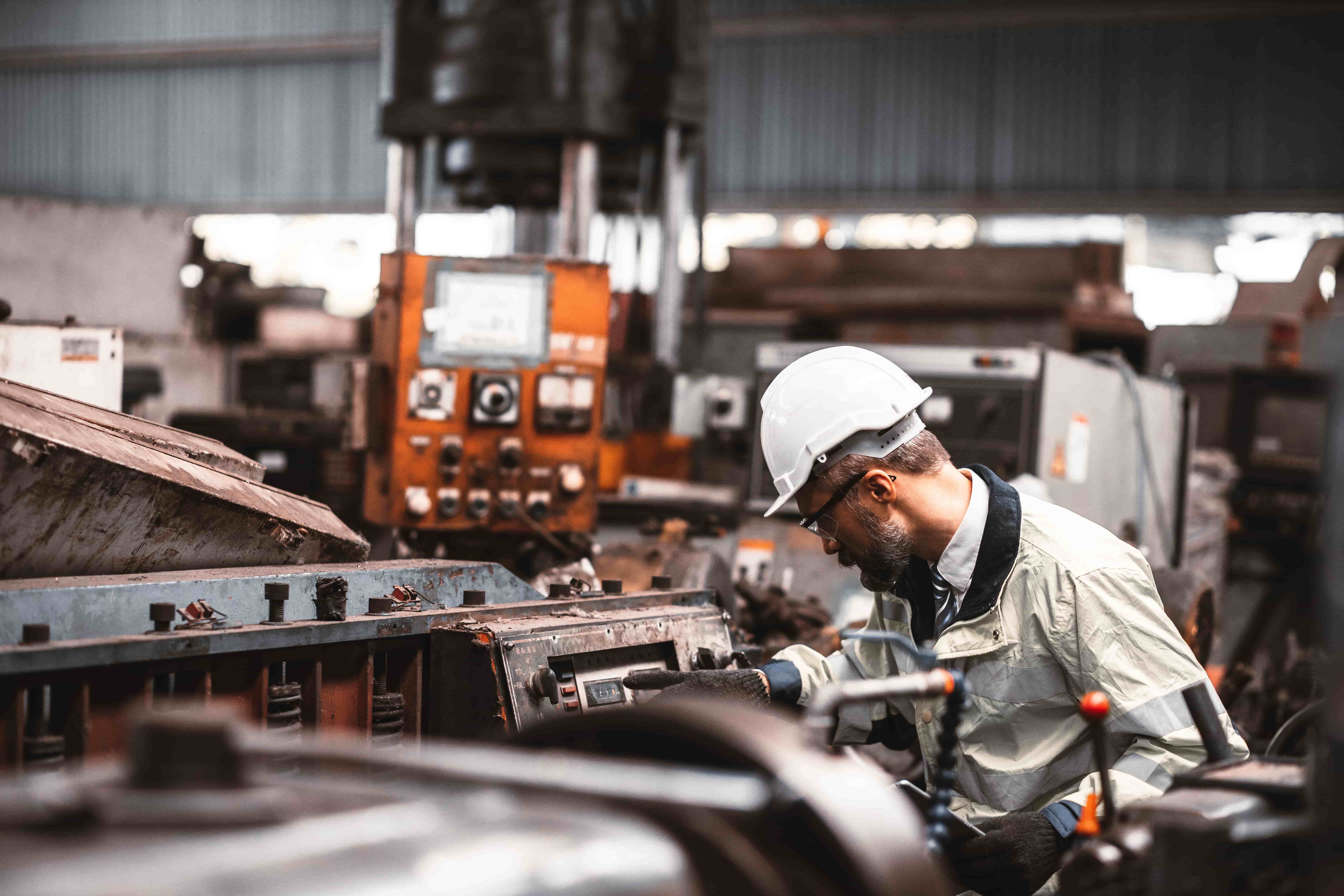
Europe needs new manufacturing leaders because the operating model underneath the sector has changed faster than the leadership pipeline that is supposed to run it. Nearshoring, automation, and the energy transition are reshaping what a plant, a supply chain, and a P&L look like. The result is a widening gap between the manufacturing leaders Europe has on its org charts and the manufacturing leaders Europe actually needs to compete over the next decade.
For most of the last twenty years, running a European manufacturing operation meant optimizing a known system: stable supply chains, predictable energy costs, and a workforce structured around decades-long tenure. That system is gone. Industrial production across the euro area is recovering, but unevenly and slowly, up just 0.3% year-on-year in the euro area and 0.9% across the EU as of April 2026, following a fragile 1.5% average gain in 2025. Growth this thin does not reward operators who simply keep the line running. It rewards leaders who can restructure how the line runs.
The stakes are not abstract. Companies that keep promoting on technical seniority and operational familiarity, without updating the leadership profile for reindustrialization, automation, and workforce transformation, will lose ground to competitors who move first. This is already visible in how fast reindustrialization strategies are scaling across the continent, and in how few companies have the executive bench to execute them.
What Is Driving Europe's Reindustrialization
Three forces are converging on the European manufacturing sector at once, and each one changes what "operational leadership" means in practice.
The first is supply chain realignment. According to the Capgemini Research Institute's 2026 Reindustrialization report, nearly three-quarters of large European and US organizations now have a reindustrialization strategy in place or in development. Within Europe specifically, the shape of that strategy is shifting: nearshoring has receded from 55% to 39% of organizations year-over-year, while reshoring has climbed from 34% to 42%. Friendshoring, relocating production to geopolitically aligned partners, is now cited by 64% of European organizations. This is not a simple "bring it home" story. It is a portfolio decision that most operational leaders were never trained to make.
The second is energy. The European Investment Bank's 2025/2026 Investment Report notes that lower energy costs support more productive investment and stronger margins for manufacturers, particularly those competing internationally, but that energy-intensive industries still face real cost pressure. Leaders now have to factor grid flexibility, storage, and cross-border interconnection into plant-level decisions that used to be purely operational.
The third is the single market itself. The EIB report also finds that 62% of EU firms report difficulty exporting to other EU countries because of fragmented rules and regulations, even though the single market has underpinned a quarter of all new investment in the EU since the 1980s. Manufacturing leaders now need to navigate regulatory fragmentation inside Europe almost as carefully as they navigate trade relationships outside it.
None of these forces is new in isolation. What is new is that they are hitting at the same time, on companies whose leadership bench was built for a steadier decade.
What Does the New Manufacturing Executive Profile Look Like?
The manufacturing executive Europe needs now sits closer to a portfolio strategist than a plant operator. The core job has not disappeared. Output, quality, and safety still matter. But the profile now requires several capabilities that were optional a decade ago.
The first is supply chain and footprint judgment: the ability to weigh reshoring, nearshoring, and friendshoring against cost, resilience, and regulatory exposure, not as a one-time project but as an ongoing portfolio decision. The second is capital and automation fluency: understanding where automation genuinely changes unit economics versus where it is a headline investment with a weak return. The third is workforce transformation, since retraining and redeploying an existing workforce, rather than simply hiring around gaps, is now central to closing skills shortages. McKinsey's Next Era of Work research found that only 12% of European organizations plan workforce needs three years or more into the future, and 31% of European leaders say they lack visibility into the skills they already have. A modern manufacturing executive closes that gap rather than working around it.
Fourth, and increasingly non-negotiable, is a working understanding of how AI and data are changing plant-level decision-making, from predictive maintenance to demand planning. This is closely tied to how AI is reshaping manufacturing leadership, and CHROs who are still hiring against the old profile are already behind.
This is a different person than the plant manager who came up through operations twenty years ago. It is not a worse profile. It is a broader one, and it is scarce.
Where Europe's Manufacturing Leadership Gaps Are Sharpest
The shortage is not evenly distributed. Italy, Germany, and parts of Central Europe show the widest gaps between demand for this new profile and available supply.
In Italy, the gap is structural. The country's manufacturing base is dense with mid-sized, often family-owned industrial companies that built deep technical expertise but historically underinvested in structured leadership development beyond the founding generation. As these companies pursue reindustrialization and automation, they need operational leaders who can professionalize decision-making without losing the technical credibility that earns trust on the shop floor. That combination is rare, and it is rarer still among candidates willing to relocate into secondary industrial hubs rather than Milan or Turin.
Germany faces a different version of the same problem. Its industrial base is larger and its leadership pipelines are more formalized, but the country's manufacturing model was built around export-led, just-in-time production that is now being restructured around resilience and regional diversification. Executives who spent careers optimizing for efficiency are being asked to optimize for flexibility instead, and that is a genuine shift in judgment, not just a new set of KPIs.
Central Europe, particularly Poland and the Czech Republic, is where the constraint is more acute. These markets have absorbed significant nearshored and friendshored manufacturing investment, but the local pool of executives with both the international exposure and the operational depth to run those sites is thin. Companies expanding there often need to import leadership talent rather than build it locally, at least in the near term.
The Most Common Mistake: Hiring for Yesterday's Plant Manager
The single most common mistake European manufacturers make when filling operational leadership roles is writing the job spec for the plant they used to run, not the one they are building.
This shows up in three patterns. The first is promoting from within based purely on technical seniority, treating years on the floor as a proxy for strategic readiness, when the two are increasingly unrelated. The second is writing job specs that emphasize operational stability and cost control almost exclusively, with no explicit requirement for transformation experience, supply chain restructuring, or workforce redesign. The third is underweighting change management capability entirely, on the assumption that a technically strong leader will figure out the people side as they go.
The cost of this mistake compounds. A leader hired for operational continuity, dropped into a reindustrialization mandate, will default to what they know: incremental efficiency gains rather than structural change. By the time the mismatch becomes visible, usually eighteen to twenty-four months in, the company has lost time it cannot easily recover, and often the trust of the board or ownership group that approved the reindustrialization strategy in the first place.
How to Search for These Profiles Effectively
Finding this profile requires a different search process than filling a traditional plant leadership role.
Start by separating technical credibility from transformation experience in the search brief itself. A candidate needs enough operational depth to be credible with plant teams, but the search should weight transformation track record, has this person actually restructured a supply chain, led an automation rollout, or redesigned a workforce, over years of tenure in a similar role.
Second, widen the geographic aperture deliberately. Given how thin the talent pool is in specific hubs, particularly in Italy and Central Europe, the strongest candidates are often already working across borders, either in adjacent industrial economies or in multinational operating roles. A search limited to domestic candidates will systematically miss them. This is closely related to how companies should approach building a C-suite for cross-border operations, where the same logic applies to defining what "right" looks like across markets before starting the search.
Third, test for judgment under ambiguity during the interview process itself, not just after the hire. Reindustrialization decisions rarely have a clean right answer. The strongest candidates can walk through how they weighed a genuinely uncertain tradeoff, cost against resilience, speed against regulatory risk, rather than presenting a case study with the benefit of hindsight.
Key Takeaways
- Europe's industrial recovery is real but fragile, and it is rewarding leaders who can restructure operations, not just maintain them.
- Reindustrialization strategy in Europe is shifting from nearshoring toward reshoring and friendshoring, a portfolio decision most operational leaders were never trained to make.
- The strongest talent gaps sit in Italy, Germany, and Central Europe, each for distinct structural reasons.
- The most common hiring mistake is writing job specs for the plant a company used to run, not the one it is building.
- Effective searches weight transformation track record over tenure and widen the geographic aperture beyond domestic candidates.
Frequently Asked Questions
What skills define the new generation of manufacturing leaders?
Supply chain and footprint judgment, automation and capital fluency, workforce transformation capability, and a working understanding of AI-driven operations. Technical operational credibility still matters, but it is no longer sufficient on its own.
Which European markets have the sharpest manufacturing talent gaps?
Italy, Germany, and Central European markets including Poland and the Czech Republic show the widest gaps, though for different structural reasons in each case.
How is reindustrialization changing hiring criteria?
Companies are shifting away from pure operational tenure and toward transformation track record, particularly experience restructuring supply chains, leading automation programs, or redesigning workforces under real constraints.
Should companies promote from within or hire externally for these roles?
Neither approach works reliably on its own. Internal candidates need explicit evaluation against transformation criteria, not just technical seniority, and external searches need a wide enough geographic aperture to find candidates with genuine change experience.





.jpg)