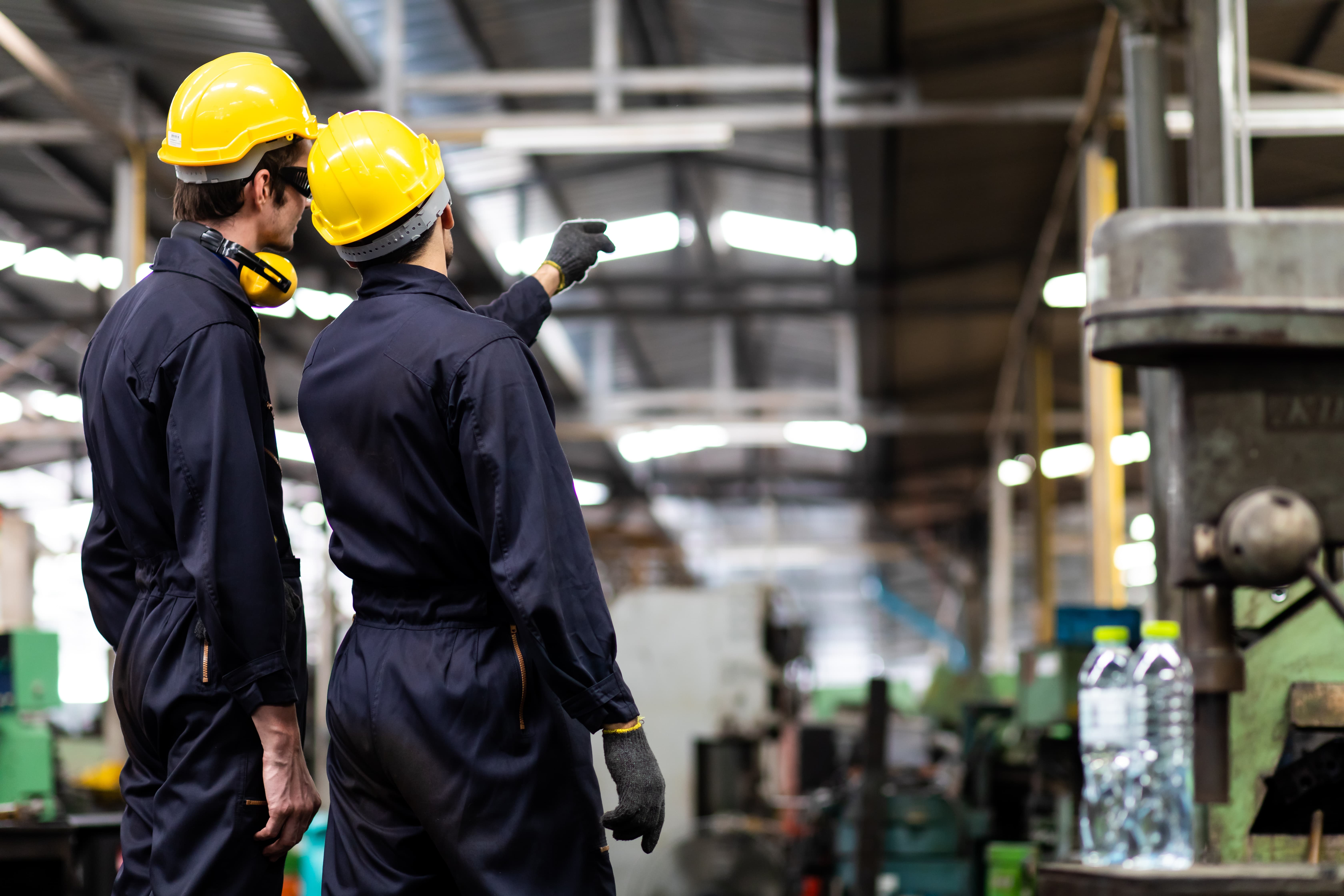
Companies are approving new plants faster than they are finding the people to run them. The bill arrives eighteen months later.
Reshoring manufacturing leadership is the part of a relocation decision that gets settled last, and it is usually the part that decides whether the rest of the plan holds. Site selection is modeled in detail. Capital goes through committee. Incentives are negotiated line by line. The leadership team that will actually stand up the facility is treated as a staffing question to be answered once construction is underway.
The volume of activity is not in doubt. The Reshoring Initiative recorded 244,000 US manufacturing jobs announced through reshoring and foreign direct investment in 2024, and more than two million announced since 2010. Roughly 1.7 million of those have actually been filled. The Initiative's own methodology is explicit about why the two numbers never match in the same year: hiring typically lags an announcement by twelve to twenty-four months.
That lag is where the leadership problem lives. It is long enough for a company to feel it has time, and short enough that a senior search opened at commissioning arrives late. What follows is what the build-phase profile actually requires, why the search starts too late, how the American and European waves differ, and how to sequence the hire against the facility itself.
Standing Up a Plant Is Not the Same Job as Running One
An executive who runs an established site inherits a working system. The line has a rhythm, the supervisors know each other, the supplier relationships are years old, and the informal knowledge that keeps output stable is already in the building. The job is to improve that system without breaking it.
An executive who stands a site up inherits a construction schedule and a blank org chart. Four things separate the two mandates.
The first is hiring at volume in a labor market the company does not know. A new facility may need several hundred people inside a year, in a region chosen for land, energy, and incentives rather than for the depth of its industrial workforce.
The second is institutional relationships. Permitting authorities, technical schools, regional employment agencies, unions or works councils, and local suppliers all have to be engaged early. These relationships are built by people who are already credible in that market, and they cannot be compressed into a quarter.
The third is ramp-up under visibility. A greenfield site carries a public commitment and a board-level date. The leader has to defend a schedule while absorbing the delays that every commissioning produces.
The fourth is judgment without precedent. There is no baseline to compare against, no historical yield curve, no established escalation path. Decisions get made on incomplete information, repeatedly.
The workforce math makes all four harder. Deloitte and The Manufacturing Institute project that US manufacturing could need as many as 3.8 million additional workers between 2024 and 2033, with up to 1.9 million of those positions going unfilled if the skills and applicant gaps are not closed. A plant leader in a reshoring program is not filling vacancies in a stable market. They are building a workforce in a market that is already short.
Why Does Reshoring Manufacturing Leadership Get Searched Too Late?
Because the decision sequence treats leadership as an operating cost rather than a precondition. Capital planning, site selection, and incentive negotiation all have owners, budgets, and calendar deadlines. The leadership hire has none of those until the facility is close enough to completion that someone has to be accountable for it. By then the search is running against a fixed date rather than in front of one.
There is also a reporting artifact at work. Announcements are made by corporate development and communications. Hiring is executed by operations and HR, often months later, sometimes in a different country. Nobody owns the interval between the two.
Kearney's 2026 Reshoring Index describes the macro version of the same disconnect. US manufacturing investment has roughly tripled over the past four years, while manufacturing capacity has grown about 1.5%. Money moves faster than the ability to convert it into working production, and the conversion step is largely a people problem: the leadership to run the asset, and the workforce that leadership has to recruit and train.
For a manufacturing executive reshoring in 2026, this means the constraint is rarely capital and rarely technology. It is the availability of someone who has done the build before.
Where the American and European Waves Diverge
The two reshoring waves look similar from a distance and behave differently on the ground.
In the United States, momentum is policy-driven and increasingly concrete. The Reshoring Initiative's 2026 survey found that 36% of OEMs had reshored or were actively engaged in further reshoring during the year, up from 29% in 2025, while the share of contract manufacturers quoting reshoring projects doubled from 16% to 32%. Much of this activity lands in states selected for cost and incentives rather than for the depth of their manufacturing management pool. The result is a genuine scarcity of executives who can lead a start-up plant in a region where few have been started recently.
In Europe, the pattern is more selective. Capgemini's 2026 reindustrialization research describes a shift toward rightshoring, a deliberate mix of domestic, regional, and global production rather than wholesale relocation, with European companies pushed toward friendshoring by energy costs, labor costs, and regulatory fragmentation. The European Commission's spring 2026 survey of EU manufacturers is blunter still: moving production back into the EU remains rare. What is common is regional rebalancing, frequently toward Central and Eastern Europe.
That changes the leadership requirement. A European reshoring decision rarely produces one large greenfield site with one obvious leader. It produces a distributed footprint across two or three jurisdictions, each with its own labor law, language, and industrial relations culture. The executive profile has to hold that complexity together, which is a different skill from commissioning a single plant. We looked at how that profile is changing across the continent in Manufacturing Leaders Europe: Why the Region's Reindustrialization Needs a New Executive Profile.
This is felt hardest by mid-sized industrial companies. A large group can move an experienced executive from one site to another and absorb the cost of a slow start. A company running two or three plants has no internal bench to draw from, and the person who would lead the new site is currently indispensable at the existing one. For these companies the reshoring decision and the leadership decision are effectively the same decision, taken at the same board meeting, whether or not anyone frames it that way.
The common thread is this. On both sides of the Atlantic, the scarce profile is the leader who can start something, not the leader who can optimize something already running.
The Most Common Mistake: Hiring the Plant Leadership Team Last
The single most common error in reshoring programs is locking the capital and the site first and treating the leadership team as the final line item.
It shows up in three predictable ways. Companies appoint an interim leader to cover the build, which turns the first year into a holding pattern rather than a foundation. They promote a strong operations manager from an established plant into a start-up mandate, on the assumption that the sector experience transfers, when the two jobs test different capabilities. Or they hire whoever is credible and available within a reasonable radius of the new site, which is a supply-side decision dressed up as a hiring decision.
The cost is not visible immediately, which is what makes the mistake durable. It surfaces at month eighteen to twenty-four, in slower ramp-up, higher early attrition among the first hires, and a supervisory layer recruited under time pressure rather than to a standard. By that point the company is no longer building a plant. It is repairing one, and repairing a young workforce is considerably more expensive than recruiting it correctly the first time.
The knowledge dimension compounds it. Many reshoring programs are staffed partly by transferring experienced people from existing sites, at exactly the moment those sites face their own retirement wave, a pressure we examined in The Quiet Crisis in Manufacturing: An Aging Workforce and No Succession Plan. Companies that plan the new site's leadership late tend to solve it by drawing down the old site's bench, and end up with two problems.
How to Sequence the Leadership Hire Against the Build
The sequencing question has a practical answer. Five points make the difference.
Open the search at capital approval, not at commissioning. If hiring lags announcements by twelve to twenty-four months, that interval is the planning window, not a buffer. A senior search run properly takes a meaningful share of it.
Write the brief for the build phase explicitly. State that the mandate is to stand up a facility, and weight evidence of having done it: a commissioning, a ramp-up, a workforce built from zero. Years of tenure running a mature plant is not the same evidence.
Hire the site leader before the site HR lead. The workforce plan, the shift model, and the supervisory structure are operating decisions, and they should be made by the person accountable for output rather than inherited by them.
Decide early which roles must be local and which can be relocated. Plant leadership, industrial relations, and recruitment usually need someone who already lives in that market and understands its institutions. Technical and quality leadership can more often be transferred. Deciding this at the start prevents the default assumption that everyone will be found locally, or that everyone will be sent.
Test for judgment under ambiguity in the process itself. Ask candidates to walk through a decision they made with incomplete information during a ramp-up, and what they would do differently. A start-up plant will produce that situation weekly.
None of this makes the search easy. The pool of executives who have genuinely commissioned a facility in the last decade is small, and in the regions currently attracting investment it is smaller still. But the difficulty is an argument for starting earlier, not for starting later with a wider job description. Companies that treat the leadership question as part of the investment case, alongside land, energy, and incentives, tend to reach full output on the schedule they announced. Companies that treat it as recruitment tend to announce a date twice.
Key Takeaways
- More than two million US reshoring and FDI jobs have been announced since 2010 and roughly 1.7 million filled, with hiring typically lagging announcements by twelve to twenty-four months.
- Standing up a facility and running an established one are different mandates: the first requires volume hiring in an unfamiliar labor market, local institutional relationships, and decisions without a baseline.
- Kearney's 2026 Reshoring Index shows US manufacturing investment roughly tripling over four years against about 1.5% capacity growth, a conversion problem that is largely about people.
- The American wave is concentrated and greenfield; the European wave is distributed across jurisdictions. Each demands a different executive profile, and both are short of leaders who can start rather than optimize.
- The most common mistake is treating leadership as the last line item after capital and site decisions. Open the search at capital approval and write the brief for the build phase.
Future Manager World works with manufacturing leadership teams across 40+ markets. Talk to our team.
Frequently Asked Questions
When should a company start the leadership search for a reshored plant?
At capital approval, not at commissioning. Because hiring typically lags a reshoring announcement by twelve to twenty-four months, that interval is the natural planning window for a senior search. A search opened at commissioning is already running late.
What makes the leadership profile for a new plant different?
A start-up site requires volume hiring in an unfamiliar labor market, building institutional relationships with authorities, schools and unions, managing ramp-up under a public commitment, and making decisions without a historical baseline. Running a mature plant tests none of these directly.
How do US and European reshoring differ for hiring?
US reshoring tends to produce concentrated greenfield sites in regions with a thin management pool. European reshoring is more often a selective rebalancing across several jurisdictions, which requires executives who can operate a distributed footprint across different labor laws and industrial relations cultures.
Should plant leadership be hired locally or transferred internally?
Usually both, in a deliberate split. Plant leadership, industrial relations and recruitment benefit from someone already established in the local market. Technical and quality leadership transfer more easily from existing sites, provided the drawdown does not weaken the originating plant.





.jpg)